Why Organic Farming Matters for Our Land
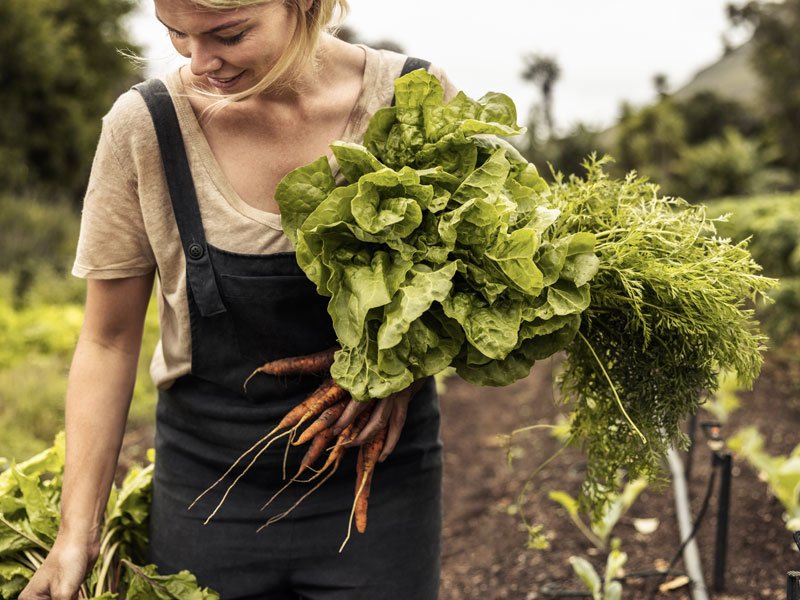
How the way we grow food can harm or restore our land.
The effects of farming don’t stop at the edge of a field. Rain leeching and runoff can carry agricultural chemicals into nearby waterways, pesticides can affect insects and wildlife, and the way we manage our soil influences the health of entire ecosystems.
These impacts matter because farmland isn’t separate from nature. It’s part of it.
Organic farming takes a different approach, restricting all use of conventional synthetic chemicals and emphasizing practices that support soil health and biodiversity. Research shows that these choices can make a meaningful difference to the land and the living systems around it.
Protecting Our Waterways
What happens on farmland doesn’t necessarily stay there. When rain falls, it can carry pesticides, fertilizers, and eroded soil into nearby streams, rivers, and lakes. This is known as agricultural runoff, and the pollutants it carries can travel through connected waterways, eventually reaching coastal waters and oceans.
Excess nitrogen and phosphorus from agricultural runoff can trigger algae blooms that deplete oxygen in the water, harming fish and other aquatic life. Pesticides can also affect aquatic insects and organisms that form the foundation of freshwater food webs.
Organic farming does not use conventional synthetic pesticides and fertilizers, removing reliance on the chemicals that contribute to water pollution. Practices such as cover cropping, careful nutrient management, and vegetated buffers also help keep soil and nutrients where they belong.
These practices matter because protecting water begins long before it reaches a river or lake. It begins with how the surrounding land is managed.
Protecting Pollinators and Wildlife
Bees, butterflies, birds, and countless other species depend on healthy agricultural landscapes. But pesticides don’t always affect only their intended targets. Some can harm beneficial insects directly or reduce the plants and food sources wildlife depends on.
A major scientific analysis of 94 studies found that organic farms supported approximately 30% more species, on average, than conventional farms. The benefits varied by crop, species, and landscape, but the overall finding was consistent: organic management can make farmland more conducive to higher biodiversity.
Healthy ecosystems also benefit farmers. Predatory insects like ladybugs and lacewings, spiders, and birds help control agricultural pests naturally, reducing dependence on chemical interventions.
Repeated pesticide use can create another problem: resistance. Over time, insects, weeds, and disease-causing fungi can evolve resistance to pesticides, making them increasingly difficult to control. Crop rotation, biodiversity, biological controls, and other preventive practices can help reduce reliance on repeated chemical treatments.
Organic farming cannot eliminate every threat to crops but it can work more harmoniously with nature to reduce the usual pressures faced by conventional farming, while creating opportunities for beneficial species to thrive.
Building Living, Resilient Soil
Healthy soil is much more than the material that holds plants upright. It’s a living ecosystem containing bacteria, fungi, earthworms, and countless other organisms that help cycle nutrients, decompose organic matter, and support plant growth.
Organic farming emphasizes practices such as compost application, cover cropping, and crop rotation to build soil fertility. Research has found that organic farming systems often support greater soil microbial activity and organic matter than conventional systems.
Improved soil structure can also help farmland absorb and retain water, thus reducing erosion, and better withstand periods of drought or heavy rainfall. Increasing soil organic matter can store additional carbon in the ground, although the amount depends on soil conditions and farming practices.
These benefits are connected. Healthy soil supports productive crops, reduces the loss of valuable organic matter in the topsoil, and helps protect the waterways and ecosystems surrounding agricultural land.
What This Means at Wish You Were Here Farm
At Wish You Were Here Farm, our commitment to organic farming is part of a much larger effort to restore the health of our land.
We’re working toward organic certification for our Market Garden and Orchard, following Canadian Organic Standards as we complete the certification process. But we believe caring for the land means looking beyond the fields where we grow food.
Across our 88-acre property in Milton, Ontario, we’re rebuilding soil health through cover crops and compost, establishing windbreaks and native plantings, and planning the restoration of grasslands, forests, and wildlife habitat.
For us, organic farming is a starting point. We want to grow food without unnecessarily harming the soil, water, and wildlife around us. But we also want to repair some of the damage that has already been done—to rebuild depleted soils, restore habitat, and make room for nature to recover.
We believe agriculture can do more than simply reduce its environmental impact. It can be part of restoring the natural world while continuing to produce the food we all depend on.
Our goal is simple: to leave the land healthier, richer in life, and better able to sustain future generations of animals and humans than we found it.
Interested in how organic growing practices affect the food you eat? Read Why Eating Organic Matters. You can also explore Why Eating Local Matters to learn about the benefits of buying directly from nearby farms.
Sources & Further Reading
- U.S. Environmental Protection Agency. Nonpoint Source: Agriculture. Explains agricultural runoff, nutrient pollution, and the effects on waterways and aquatic ecosystems. Read the research
- U.S. Geological Survey (2024). Pesticides Are Likely Impacting Invertebrate Life Essential to Our Nation’s Streams. Research involving more than 400 streams. Read the findings
- Tuck et al. (2014). Land-use intensity and the effects of organic farming on biodiversity: a hierarchical meta-analysis. Journal of Applied Ecology. Analysis of 94 studies. Read the study
- Lori et al. (2017). Organic farming enhances soil microbial abundance and activity — A meta-analysis and meta-regression. PLOS ONE. Read the study
- Cui et al. (2023). Investigating the effects of organic amendments on soil microbial composition and its linkage to soil organic carbon: A global meta-analysis. Science of the Total Environment. Read the study
- Ontario Ministry of Agriculture, Food and Agribusiness. Pesticide Resistance Management. Explains how insects, weeds, and plant diseases develop resistance and the importance of integrated pest management. Read the guidance
- Journal of Environmental Quality (2026). Surface water quality impacts from organic versus conventional agricultural systems. Review of 37 comparative studies, documenting differences in nutrient and soil losses. Read the review